
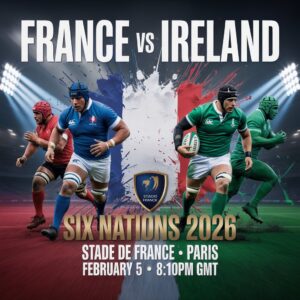
When the Six Nations kicks off in Paris on Thursday, February 5th, 2026, it won’t just be another Round 1 fixture—it’ll be a statement of intent from two sides who’ve spent the last five years trading championship silverware. France and Ireland have turned this fixture into the modern era’s defining rivalry, and with Les Bleus defending their 2025 title and Andy Farrell’s men hungry for redemption after last year’s 42-27 hammering, this opener carries the weight of a final.
France vs. Ireland – Kick-off & Viewing Details
Date: Thursday, February 5th, 2026
Venue: Stade de France, Paris
Kick-off: 3:10pm ET (8:10pm GMT)
Referee: Karl Dickson (England)
TV Coverage: ITV (UK), RTÉ (Ireland)
The Stade de France under lights is one of rugby’s great amphitheaters—80,000 voices belting out La Marseillaise with a ferocity that rattles the pitch. The surface plays fast, which suits both sides’ attacking ambitions, but it’s the atmosphere that tilts the advantage toward France. Ireland haven’t won in Paris since Johnny Sexton’s last-gasp drop goal in 2018, and breaking that drought in front of a raucous home crowd will be Farrell’s first major test.
For those of us not in Paris, going to NYC’s best Six Nations Rugby bar, The Winslow (located near Union Square at 243 E 14th St) is the next best thing. Doors open at 2:40pm ET—thirty minutes before kick-off—and if you’re not there early, you’re watching from the sidewalk. Dedicated audio, proper pints, and a room packed with expats who know the difference between a jackal and a poach. This is where New York’s rugby faithful gather when it matters.
The Tape: Team Analysis
France – Flair Meets Physicality
France are reigning champions for a reason: they’ve married their traditional offloading game with a forward pack that can bully anyone at the set-piece. Antoine Dupont remains the fulcrum—his ability to manipulate defensive lines with his running threat and his decision-making at the base is unmatched. Expect him to target Ireland’s fringe defense early, probing for soft shoulders around the ruck.
Out wide, Damian Penaud is the most dangerous finisher in the tournament. He’s scored tries in four of his last five starts against Ireland, and with France’s willingness to attack from deep, he’ll get opportunities if Ireland’s drift defense loses its shape. The third key figure is Cameron Woki in the back row—his athleticism over the ball and his ability to carry into contact make him a nightmare for Ireland’s pod system.
The concern for France is discipline. They conceded 14 penalties in their 2024 autumn loss to New Zealand, and Ireland’s kicking game is ruthless at exploiting field position. If Karl Dickson is strict at the breakdown, France’s aggressive counter-rucking could backfire.
Ireland – Precision and Tempo
Ireland’s game plan under Farrell is built on relentless tempo and suffocating breakdown work. Caelan Doris has evolved into one of the world’s premier number eights—his ability to carry on first phase, then get back over the ball on defense, sets the tone for Ireland’s pack. If he can win the gainline battle early, Ireland will strangle France’s attacking rhythm.
Jamison Gibson-Park at nine is the tempo-setter. His quick taps and box kicks are designed to keep defenses on their heels, and against a French side that loves to counter-attack, his decision-making will be critical. If he can pin France deep with accurate kicking, Ireland’s defensive system—anchored by Tadhg Beirne’s work at the lineout and breakdown—will have a platform to dominate.
The wildcard is Ireland’s midfield. If they can get Bundee Aki running hard first-phase lines, it opens up space for their back three. But France’s blitz defense, marshaled by Gael Fickou, is aggressive and physical. Ireland will need to vary their attack—short side strikes, skip passes, and grubbers in behind—to avoid getting jammed on the gainline.
Ireland’s Achilles heel in 2025 was their inability to cope with France’s offloading game in contact. If they don’t adapt their tackle technique—going lower, committing fewer numbers to the ruck—they’ll bleed tries again.
The Verdict
France by 5.
This will be tighter than last year’s blowout, but France’s home advantage and their ability to score from anywhere on the pitch gives them the edge. Two tactical factors tip the balance:
- Bench Impact: France’s finishers—particularly their front row and the introduction of fresh legs in the back row—have been devastating in the final 20 minutes. If the game is tight heading into the last quarter, expect France to pull away.
- Breakdown Discipline: Ireland’s ruck accuracy has slipped in recent outings, and if France can slow their ball or force turnovers, it disrupts the tempo that makes Ireland dangerous. Dupont and Woki will target isolated carriers, and Dickson’s interpretation of the jackal will be crucial.
Ireland will stay in this until the final 10 minutes, but France’s ability to conjure tries from broken play—off turnovers, off transition, off nothing—will be the difference. Expect a 28-23 scoreline that flatters neither side but delivers edge-of-your-seat rugby.
Full Time
This is the fixture that defines modern Six Nations rugby—two heavyweights trading blows with championship stakes on the line in Round 1. France will look to stamp their authority early and defend their crown; Ireland will aim to exorcise the ghosts of 2025 and lay down a marker for their own title push.
Get to The Winslow by 2:30pm ET. Secure your spot, settle in with a proper pint, and watch two of the world’s best sides go to war. This is why we love this tournament.
 Rugby Bar Etiquette: Essential Rules for a Fun and Safe Viewing Experience